
Should You Pay Off Debt or Invest? A Framework for Physicians
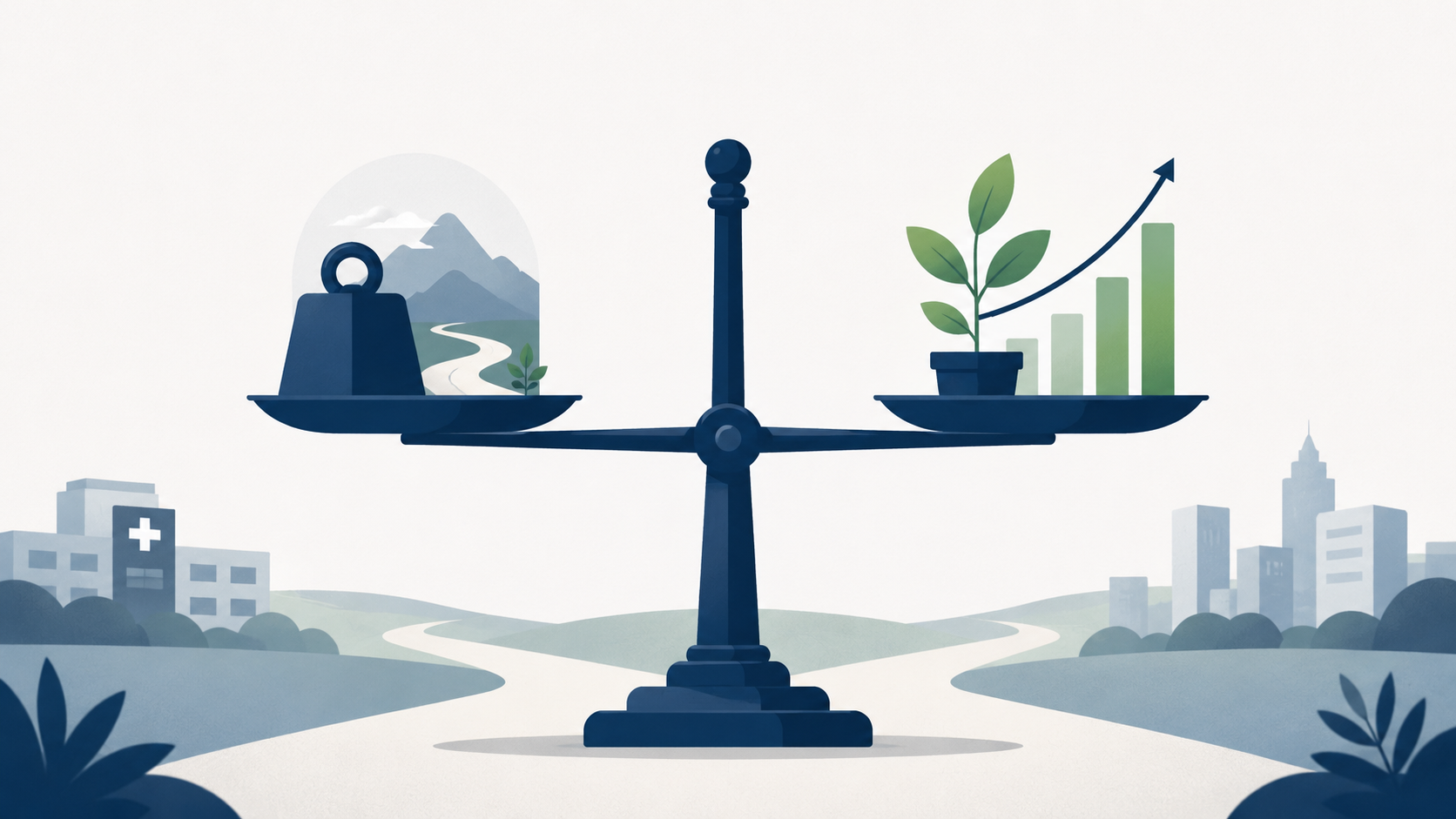
One of the most common questions we hear from clients — especially new attendings — is simple: should I pay off debt or invest?
It makes sense why this comes up so often. Once you finish residency and start earning an attending salary, you often have real cash left over at the end of the month for the first time in your adult life. You want to use it well. Here's how we think about that decision.
Both Options Are Good Options
Before diving into the framework, it's worth saying clearly: paying off debt and investing are both good moves. Both increase your net worth. Both move you closer to financial independence. Don't get too hung up on finding the "perfect" split between the two — there isn't one right answer, and either path keeps you moving forward.
It's also worth remembering that this isn't an either/or decision. You don't have to pick a lane. In most cases, the best strategy is doing a bit of both — paying down debt while also investing for the future.
The Math-Based Approach
From a purely technical standpoint, the answer comes down to interest rates. Put your money toward whichever option has the higher rate — either the interest rate on your debt or the expected rate of return on your investments.
Take credit card debt at 22% interest as an example. That debt should get paid off before you invest another dollar. Could you theoretically earn 22% on investments in a given year? Sure, but you'd be taking on significant risk to get there, and no investment offers a guaranteed 22% return.
On the other end of the spectrum, say you have a loan at 2% interest. In that case, investing extra cash instead of making additional payments toward that loan is typically the better move, since historical long-term investment returns have generally outpaced a 2% interest rate — though past performance doesn't guarantee future results.
Outside of these extremes — high-interest credit card debt on one end, very low-interest loans on the other — the math alone usually doesn't give you a clear winner. That's when the other factors below start to matter more.
Factors Beyond the Math
Your attitude toward debt. Some people are simply more debt-averse than others, and that's a legitimate factor to weigh — not just a math problem. If carrying debt keeps you up at night, even when the numbers say you'd technically come out ahead by investing instead, paying down that debt may be the right call for your peace of mind.
Your age and risk tolerance. If you're early in your career with decades of earning potential ahead of you, you likely have more capacity to take on investment risk in pursuit of higher returns — which can tilt the decision toward investing. If you're more risk-averse, or further along in your career and looking to dial back risk, leaning toward paying down debt (versus investing in lower-expected-return assets like bonds) may make more sense.
The Bottom Line
Paying off debt and investing are both solid uses of your extra cash, and doing a bit of both is often the right answer. From a pure math perspective, prioritize whichever option carries the higher interest rate or expected return. But the math is only part of the picture — your personal comfort with debt and your risk tolerance both deserve real weight in this decision.
Ready to put this into practice? If you're an ER physician or high-income professional looking for straightforward, evidence-based financial guidance, we'd love to connect. Schedule a free intro call with Yahara Wealth Management — no pressure, no sales pitch, just a conversation.
This post is for general educational purposes only and does not constitute personalized investment, tax, or legal advice. Individual circumstances vary — consult a financial advisor before making decisions about your specific situation.